
Painting the Sun Yellow Again: A Discussion on Art Conservation with Julia Nagle
As the sun begins to suggest that Spring is here, we are delighted to enrich our editorial channel with further information regarding a part of our work that is increasingly taking center stage—The Collection. For those of you who don’t know, artPost21 houses The Dreamwork Collection, a lending collection focused on the diasporic imagination, based in the UK. Most holdings focus on artists with whom long relationships have been fostered and nurtured over decades. As part of the commitment for caring for these precious artworks, we have had the absolute privilege of working with one of UK’s finest conservation studios, Julia Nagle Conservation Ltd. Here, artPost21 sits down with founder, Julia Nagle for a Q and A about the nitty-gritty of what it is that a conservator does and how.
We are often first to interact with the physical objects other than the artist and are acutely aware of the responsibility that entails.
Julia Nagle
aP21: Julia, we can’t thank you enough for all that you have done for us. Let’s kick things off with a simple, but very tricky question for our general audience. What do modern and contemporary art conservators do?
Julia Nagle: Modern and contemporary can be a confusing term and used differently in different locations, but we use the definition of 1860 to the current day and specialize in paintings on canvas, wood and metal. As art conservators we are specialists in the care and preservation of recent artworks. Often the first thing we do is assess and respond to the issues these works present. We draw on specialist knowledge and training to diagnose, document, and treat them appropriately. Unlike Old Master paintings, these works are often made with unconventional materials, creating unique conservation challenges for us, and we also have the added benefit of engaging with living artists.
We act as stewards, ensuring paintings can be safely displayed and experienced now and in the future. Our work spans hands-on conservation in our London studio and on-site, detailed technical analysis and condition reporting, and advising on how paintings are made, handled, transported and displayed. When works are new or recent we are in the unique position of being able to apply preventive standards in a meaningful way, using knowledge that we all share about the ageing of materials and the results of former conservation or restoration practices.
The emphasis nowadays is on minimal intervention and preventive care rather than ‘restoring’ an object to an earlier state. This may include trying to slow deterioration by, for example, advising on suitable light levels for display and ensuring good handling and packing systems are in place. Of course, sometimes artworks are made to deteriorate, and we need to inform ourselves about the concept as well as the materials to ensure we are adhering to the artists’ intent.
We also need to balance the need for work to be seen and enjoyed as widely as possible with its preservation, which can be tricky with large paintings with often very sensitive, unvarnished surfaces that are intended to be displayed without frames or glazing to protect them. Ours is a highly collaborative field – we work closely with artists, their studios and estates, as well as with art technicians, transport specialists, insurers, framers, curators, scholars, collectors and institutions to support exhibitions, loans, and long-term care.
We are often first to interact with the physical objects other than the artist and are acutely aware of the responsibility that entails. We are careful to select stable and reversible materials that have been thoroughly age-tested, to be very conservative about adding any materials at all, and to keep up to date on all the latest research, especially into cleaning.
Cleaning modern paintings is very different from treating aged oil paintings, which is partly why conservation of modern and contemporary paintings is a specialism within a specialism. We are grateful to conservation scientist colleagues worldwide who have revolutionized this process and shared their research within the profession.
People are often surprised that modern and contemporary artworks need treatment. Some of our work comes from accidental damage, usually when paintings are transported, so tears in canvas, splits in hardboard and so on. That’s why we are always there to advise on correct safe packing and transport to avoid such issues wherever possible. Other commissions come from paintings, and artists, that have been neglected for many years.
For example, we prepared several paintings for the ‘Women in Revolt’ exhibition at Tate Britain and for the ‘Nigerian Modernism’ exhibition at Tate Modern. This is a very exciting and rewarding part of our job and I feel privileged to be working at a time when such a variety of artists from different backgrounds are being appreciated for the first time.
aP21: How did you get your start in this line of work?
Julia Nagle: Conservation covers science, art and art history and with the English education system where most people choose 3 A Levels, it’s really unusual to have that breadth of knowledge. I studied Art, English and History at A Level. My first degree was from Edinburgh University and was a 4-year MA Honours in Arts, which was great as I was able to broaden my studies to include Philosophy, Politics, Classical Art, and Art History. People can enter conservation training courses from different backgrounds including sciences, art history or practical art.

I did a 2-year masters in the Conservation of
Easel Paintings at Newcastle Polytechnic from 1991-1993.
I had a lot of catching up to do on Physics and Chemistry
during my conservation MA,
but it was fascinating
and I love the fact our job encompasses different disciplines.
After training I was lucky enough to get part-time work at The Hamilton Kerr Institute (HKI) at Cambridge University treating Old Master paintings from public collections such as the Fitzwilliam museum,Royal Collection and the National Trust, and started working for private clients in a shared conservation studio in London. I think it was essential to my development to share space and work with other more experienced conservators at this stage, there is so much to learn and it’s very useful to be able to discuss ideas and approaches.
In 2003, I left the HKI to take up a post at Tate Modern. I had always been interested in the particular challenges presented by modern and contemporary art, which includes so many different ideas, as well as materials and techniques. I love working closely with artists to help make their work exhibition ready. Sometimes we are involved with the production of artworks, for example we varnish paintings for artists and advise on health and safety and green solvents where applicable.
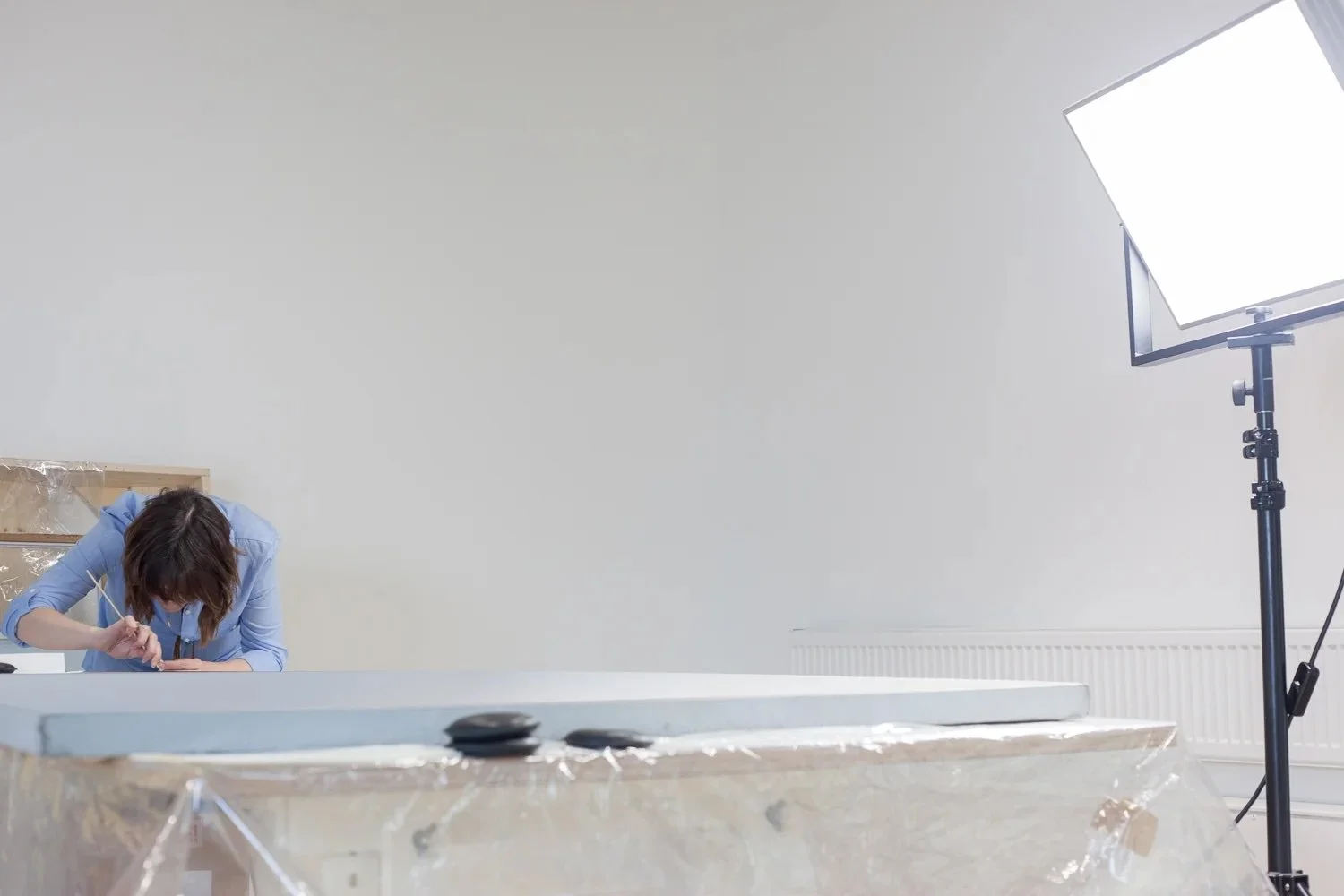
View: Work underway at Julia Nagle Studio, London
aP21: Have you ever worked on a project that you thought was so insurmountable that you simply thought it would take a miracle to achieve or is there one project that you are proudest of?
Julia Nagle: Modern conservation techniques, especially new methods for safely cleaning sensitive surfaces, have progressed enormously over the past 20 years and we are now able to treat paintings that would have been damaged beyond repair before. This is particularly true of paintings that have finishes without signs of human hand, such as areas of flat colour that have been rolled, sprayed or applied using other industrial finishes.
Sometimes even an apparently minor scuff can ruin the effect of a colourfield painting or highly polished surface and is impossible to disguise. This means that cleaning the whole surface may be the only option remaining.
One of my favourite projects is our treatment of a large, water-soluble sprayed painting on aluminium which was damaged when a skylight was left open and rain drops fell onto the surface creating masses of small spots of matte paint with glossy rings. The damage was subtle when seen face-on, but the painting was made to represent the night sky, and the effect was ruined by the spotty damages to the otherwise matte velvety finish.
The success of this project was only possible by teamwork and exploiting and expanding on the most recent developments in conservation techniques. By making agar gel plates of a specific depth and size with perfectly cut edges, we were able to use water to clean the surface of the water-soluble paint without damaging the original paint and, importantly without creating tide lines. This was a classic example of success depending on collaboration between conservators, the artist, and conservation scientists.
The artist helped us by providing a sample painting, information on the materials used, and by allowing us to visit the studio with his assistant to view results of testing and endorse the treatment.
This gave us the confidence to try something completely new. Conservation scientists from Tate took colour and gloss readings before and after cleaning, and scientists from the University of Pisa analysed the agar gels after use to check no paint or medium had been picked up and that no residues were left on the painting.
To avoid making any new marks or tide lines on the painting we carried out the treatment all in one day. This avoided changes in drying times across the paint surface and ensured the most consistent environmental conditions.
Testing and preparation took many weeks, but the process of cleaning was completed in just a few hours. Our colleague Olympia Diamond, a former women’s soccer coach, also helped us to practice the physical movement needed for a team of people to lay down gels in pairs, smooth out any air bubbles, to remove the gels after a specific time, also in pairs and oversee the process and precisely time the placing and removal of each gel plate without collisions.
We were really grateful to the artist and the insurers in this case for permission to share details of the pioneering treatment with other professionals at the Future Talks 19 conference at the Design Museum in Munich.
Permission to publish our treatments is very precious in private practice where client confidentiality is often required. It’s so helpful when we can share success stories and help push the profession forward. I loved this challenge which depended on so many different skills and such close collaboration.
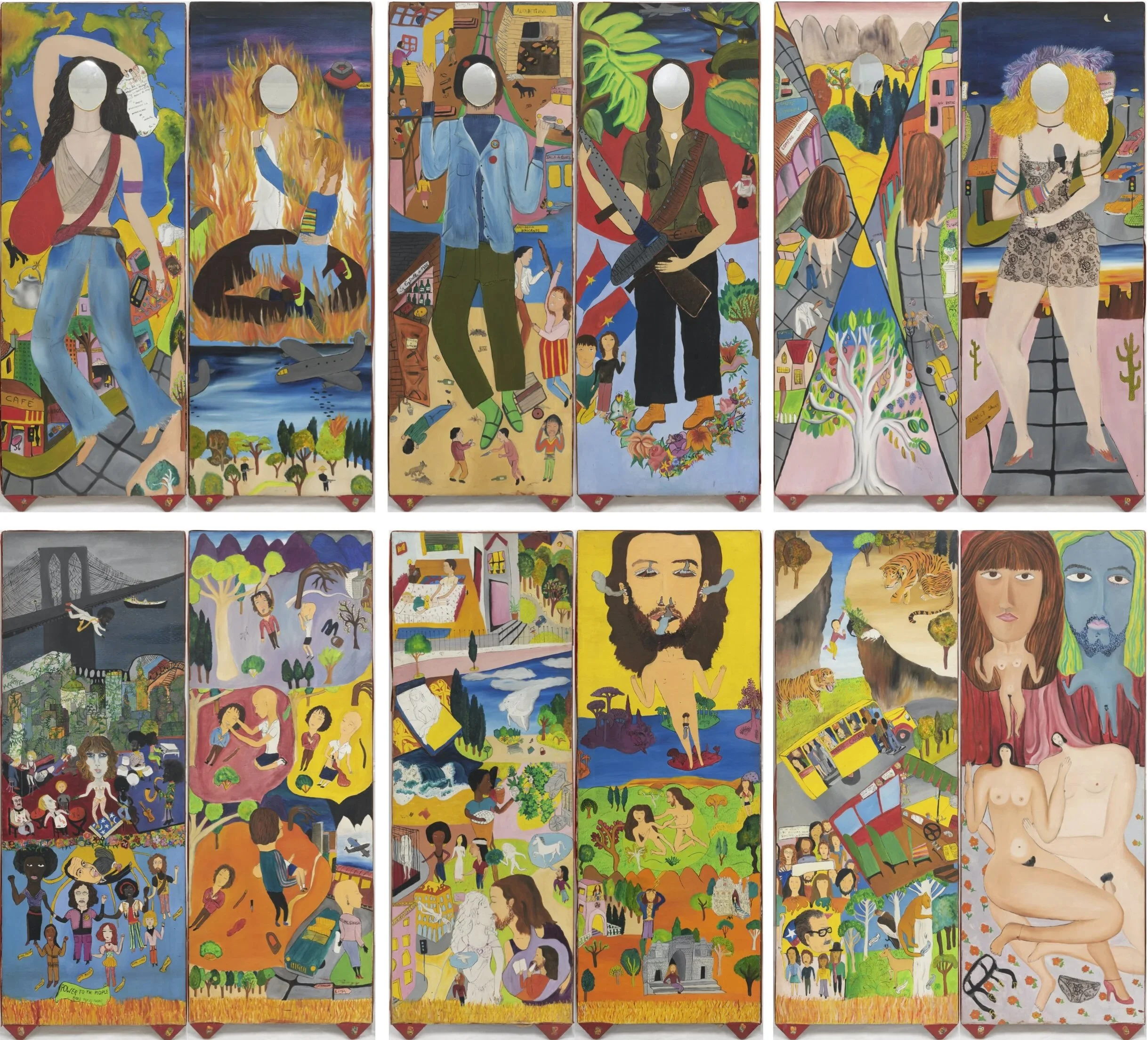
Treatment Of Biombo Casita Para Pensar Qué Situación Real Me Conviene by Cecilia Vicuña
aP21: There are so few ongoing and continuously successful conservation studios pretty much anywhere, especially in cities such as London where overheads are so high. What made you realise that there was a particular urgency and need for an independent conservation studio in London?
Julia Nagle: London is the epicentre of the UK’s art scene, so it is uniquely positioned to generate and sustain demand for high-level conservation services. It is home to some of the largest and most significant museums, galleries, and private collections in the world, all of which require ongoing, highly responsive conservation support.
That need spans routine to emergency work: from preparing condition reports for incoming and outgoing exhibitions, to urgent interventions such as responding to works damaged in private home fires. London’s historic architecture adds another layer of complexity and challenge for us – its narrow staircases, tight entrances, and lack of freight access often mean finding practical solutions when large works cannot physically enter a building without being first rolled then re stretched on-site.
At the same time, while many artists are increasingly based outside the city, London remains a hub for established and emerging practitioners, as well as for curators, scholars, and researchers. This concentration creates an active ecosystem around which conservation practice naturally revolves. It also reinforces our commitment to accessibility both for artists and for the next generation of conservators through outreach and graduate placements.
Taken together, the breadth, immediacy, and complexity of these needs made the case for an independent conservation studio in London feel not only viable but necessary.
I am also passionate about modern and contemporary conservation being recognized as a specialism independently, and that was not happening in London. While we have all trained extensively in traditional paintings, working on modern and contemporary paintings demands a different level of sensitivity to surface, artists’ intent, minimal intervention and preventive care.
Our studio is clean and more like a lab, or a paper conservation studio than an artist’s studio because we are often taking care of otherwise pristine paintings. It’s also very large with a big bifold door on the ground floor to accommodate modern paintings, which are often made on a grand scale. I’ll say it again, working in a team, in a studio of a significant size not only enables us to meet the needs of the commercial art market, which often requires last-minute assistance, but it allows us to collate our knowledge and advance our learning much more effectively than one can achieve alone.
For example, when one of us attends a course or conference we report back to the team. We have regular discussions about treatments in the studio which enables us to exchange ideas and check our decision making. This has led to some ground-breaking solutions to previously unencountered or unresolved problems.
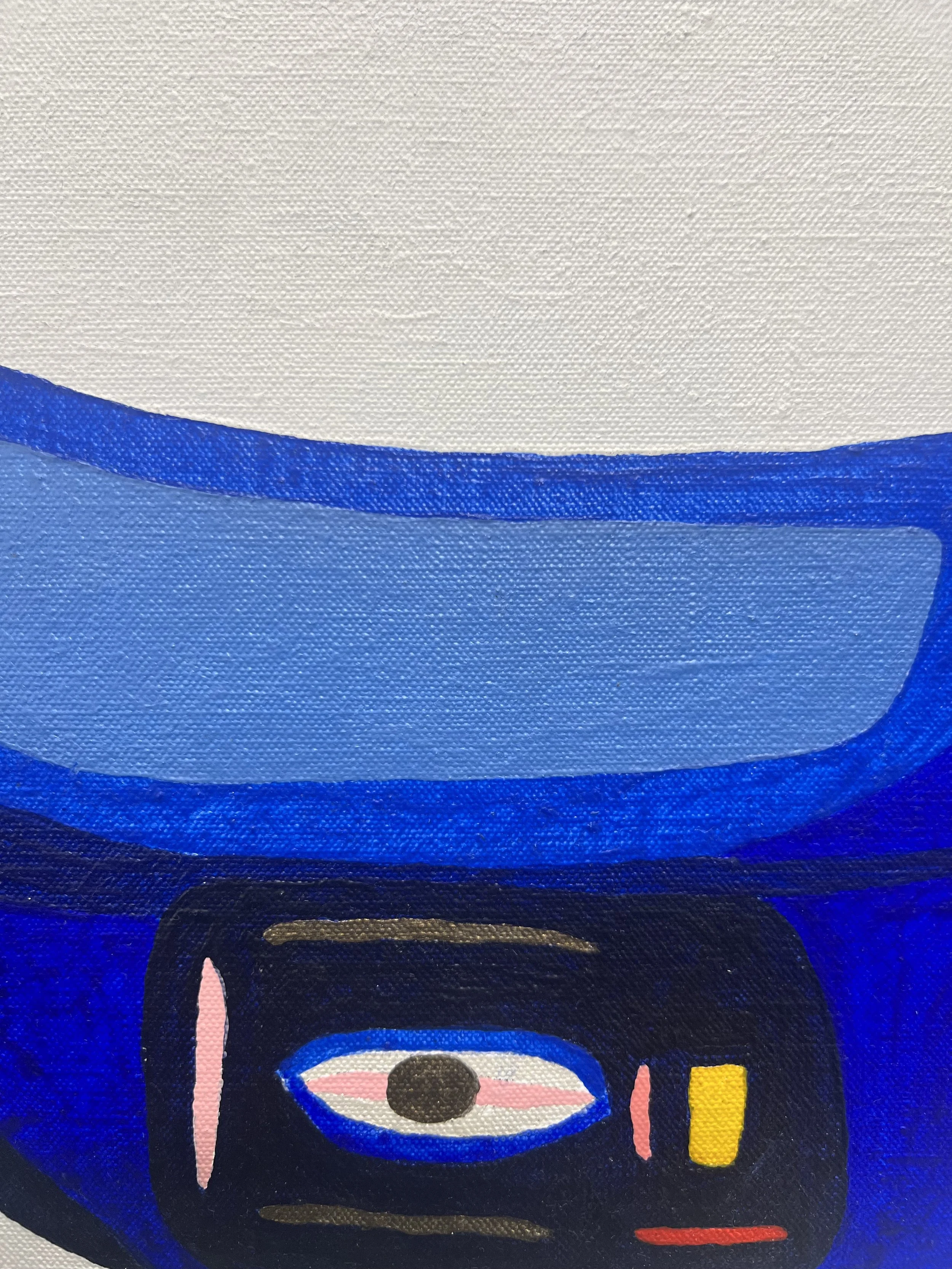
Detail of a painting by Luísa Correia Pereira, Almofariz com Pássaro (esquimó) dated 6.84, under conservation
Together, we have also compiled a substantial database of records pertaining to the condition of paintings, treatments, artists’ materials and techniques and their intent, that we can reference as needed. This has also been valuable to clients who have asked us for images of inscriptions or comparisons in condition of paintings after many years.
aP21: We have discussed this before—that ‘certain’ snooty individuals see conservation as part and parcel as of a ‘technical art history’ that is devolved from the practice and study of history. While others, such as us, believe that you cannot engage with the history of art, or an artist without making sense of the materials, forms, and approaches that an artist uses. Do you think that this divide is narrowing? And that matters are shifting? Is it all about resource scarcity, ultimately?
Julia Nagle: This is hard for me to answer because I’m immersed in the world of looking at the physical objects and trying to work out how best to interact with them without changing meaning, or appearance more than is necessary.
I have had to defend conservators at an international conference when an art historian accused the profession of being ‘obsessed with materiality’ so I agree there can be a level of snobbery about those of us who work with our hands.
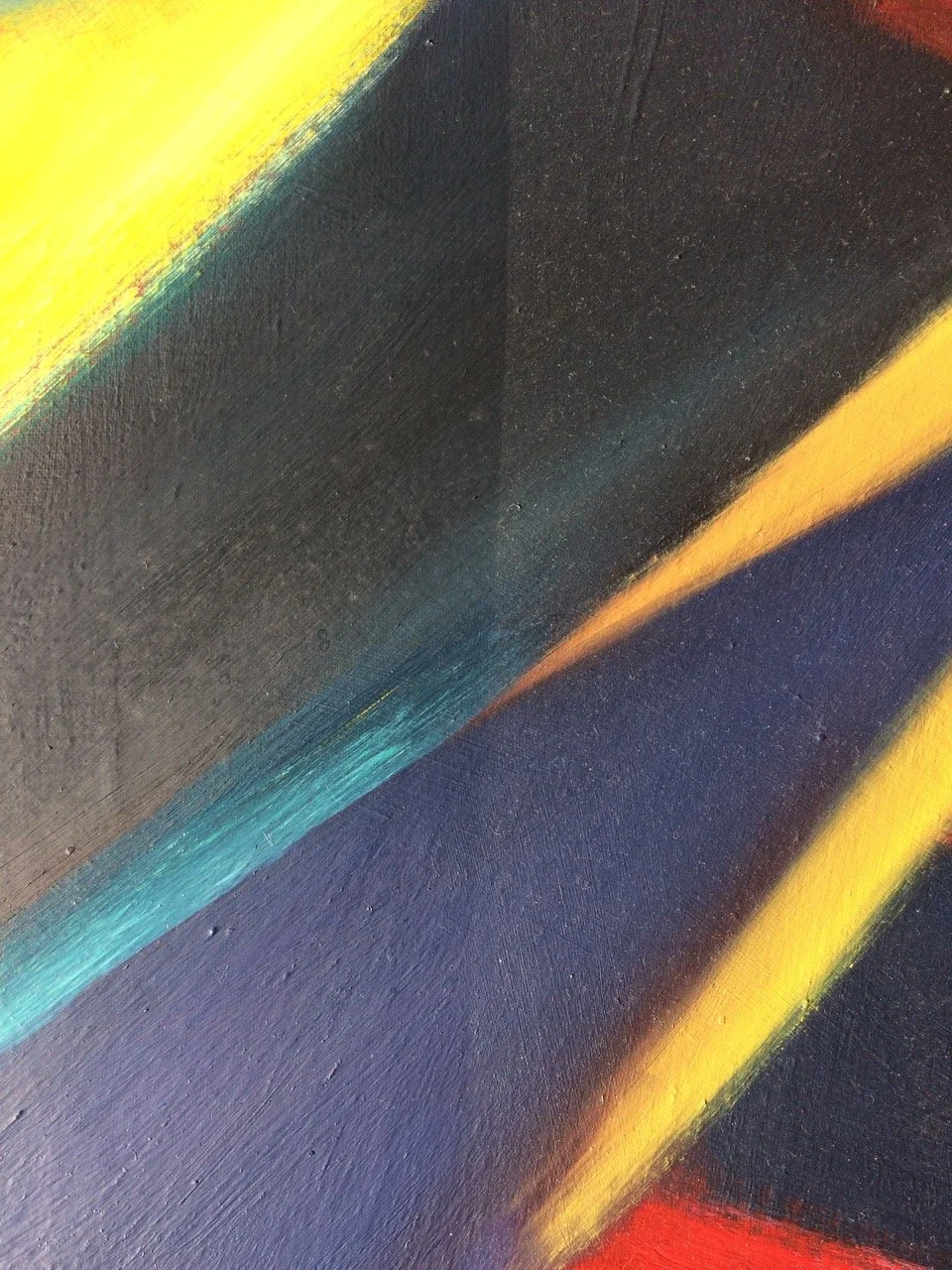
Cleaning of an early Irene Scheinmann painting reveals vibrant colours.
I see this as a problem for conservators to do more to resolve though as I don’t think we are always very good communicators; as a profession we can be too introspective. It’s important to look holistically at an object to understand it, and its meaning before interacting with it, and that’s a large part of what we do.
Working with living artists, or curators, has huge benefits, and I hope these are mutual. I think that there is probably still a hierarchy in some people’s minds between people working with their hands compared with pure academics. I find the notion that you could be working with your hands without at the same time engaging your brain quite bizarre, and certainly untrue, we need to have expertise in Art History and practical skills, and chemistry so that we are aware of what effect our actions are having on a microscopic level, not just visual. I think there’s more to be done to promote conversations between all of us in the art ecosystem (conservators, artists, curators, gallerists and technicians) these have led to fruitful relationships, once there is trust.
That is something I’m keen to promote and why I’m grateful to you for this opportunity.
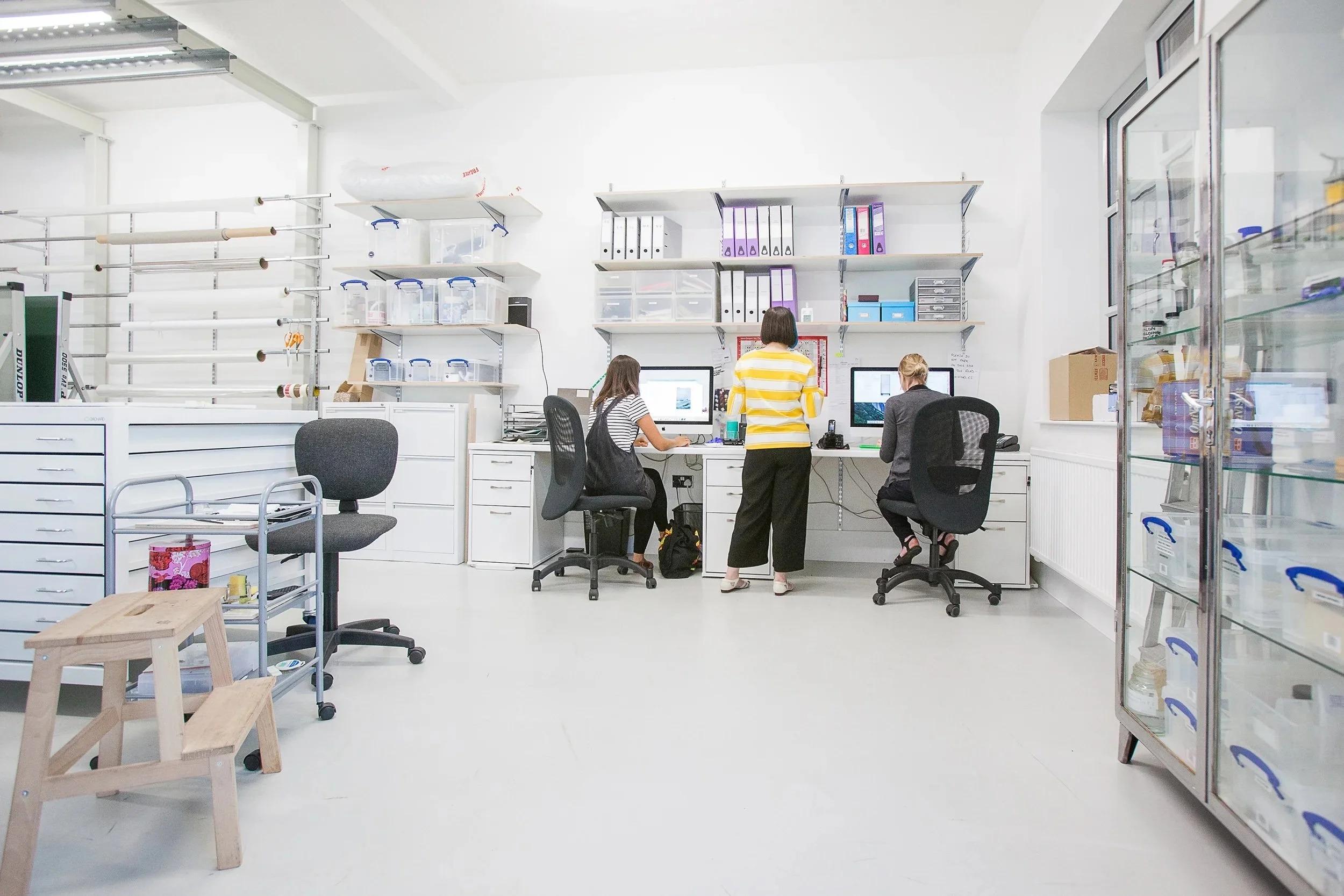
View: Julia Nagle Conservation.
aP21: Is it ever okay to leave an artwork damaged for the sake of being pure and authentic?
Julia Nagle: This is a very interesting question and not something we would normally decide independently, we would discuss this with the artist, owner or curator for example. When we receive a painting, we carry out an examination and produce a report for the client, this will include a description of what is intended and inherent, not always clear cut with modern paintings, and is followed by a description of the condition and recommendations for treatment. Each stage is itemized and costed so that the client has a level of control over costs, and the degree of intervention they desire. This is discussed and agreed before any treatment commences.
Some damage can form part of an object’s history, and we may be asked to retain it. An example comes to mind of a badly torn painting belonging to a private owner, there was a small round hole in the centre unrelated to the tear. The client requested that the tear should be repaired but the hole left alone because that was made by him and his brother shooting at the painting with an air rifle as children. In a case like that we would make sure that the hole was not going to get any larger and that the paint around it was secure.
In another case, a painting by Emma Prempeh was damaged at customs en route to Lagos Nigeria; due to time constraints we worked with Emma to help her repair the tear on site at the GAS Foundation by sending equipment and materials to Lagos, then demonstrating our techniques on a mock-up at the studio, communicating with her via FaceTime.
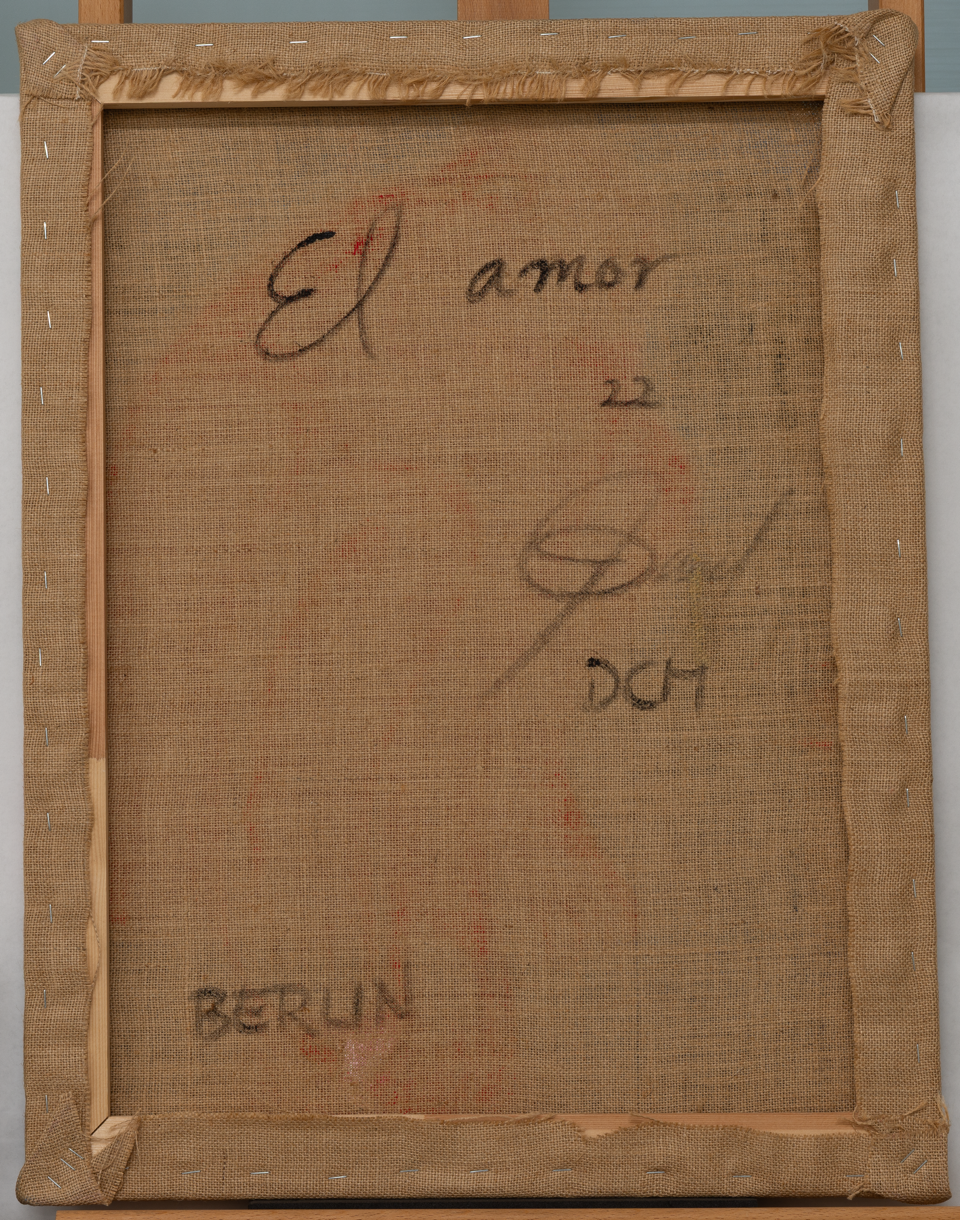
We could demonstrate the repair our end and she mirrored this at the gallery. This is not something we would necessarily have thought of doing before the Covid 19 lockdown when so much was achieved online. Once the tear was secure, Emma retouched the front then signed and inscribed the back of the repair explaining that this damage was now part of the artwork’s history:
‘This area was damaged on its journey to Lagos. As time continues to move forward, we cannot change the past be [sic] we try to move forward and hold the trials in our memories. Fixed by me, Emma, 08/09/2022’
Our main concern would always be to ensure the structural stability of an artwork and to try to slow deterioration (provided entropy was not intended as part of the work of course!).
We are aiming to preserve the artist’s intent and even small damages can completely ruin that by distracting the viewer’s attention. Having said that, our approach is as minimal as possible. Any retouching we add to paint losses is confined just to the area of damage and remains reversible over time, so that restorations can be removed in future if desired.
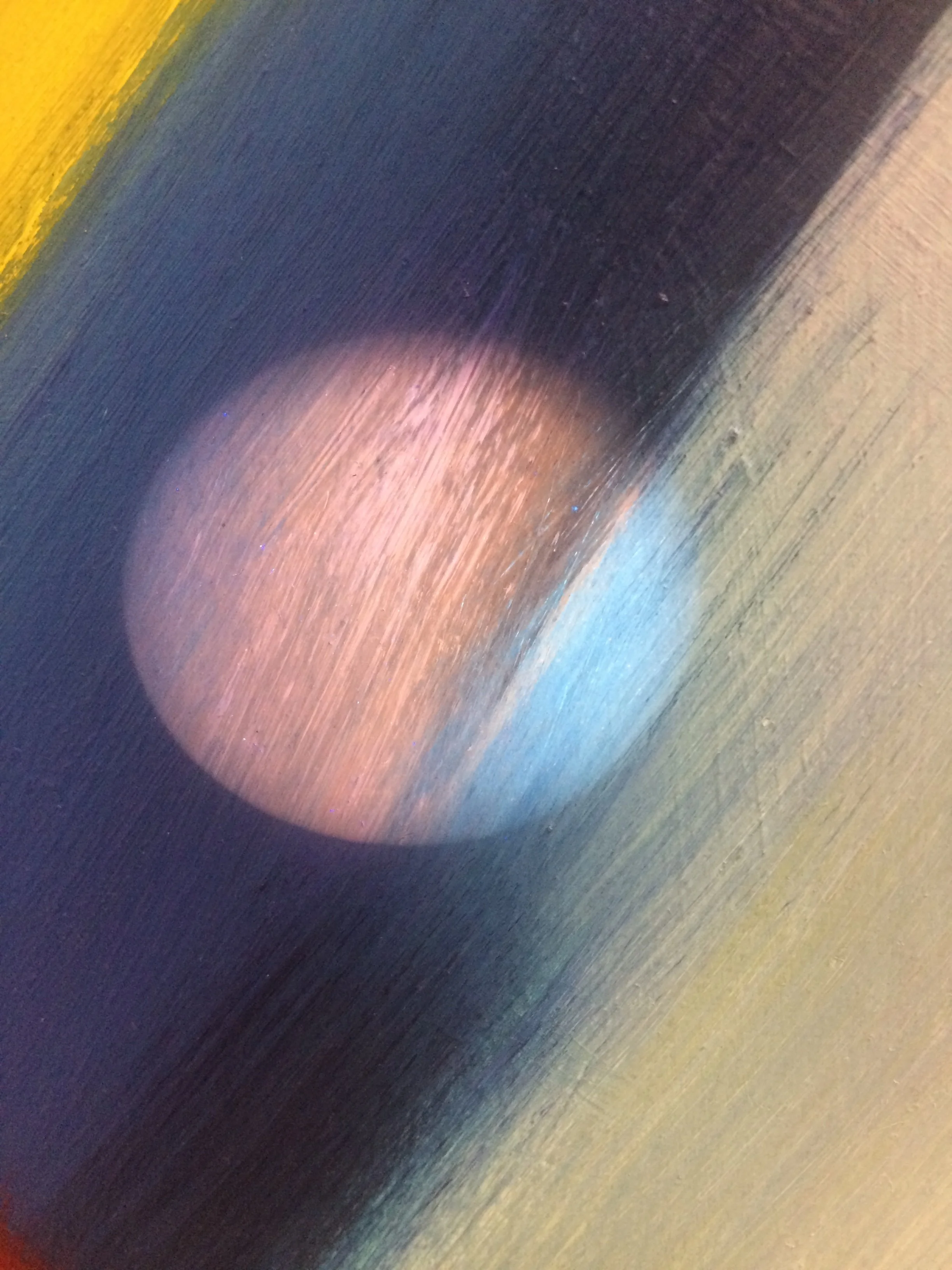
Retouching is carried out in different paints from the original and can be seen clearly under ultraviolet light.
All our treatments are also documented in detail through photographs and written reports before, during and after any intervention. This is a fairly modern concept, and we can often dramatically reduce the amount of retouching on twentieth century paintings that have been restored in a heavier way, revealing more of the original paint in the process.
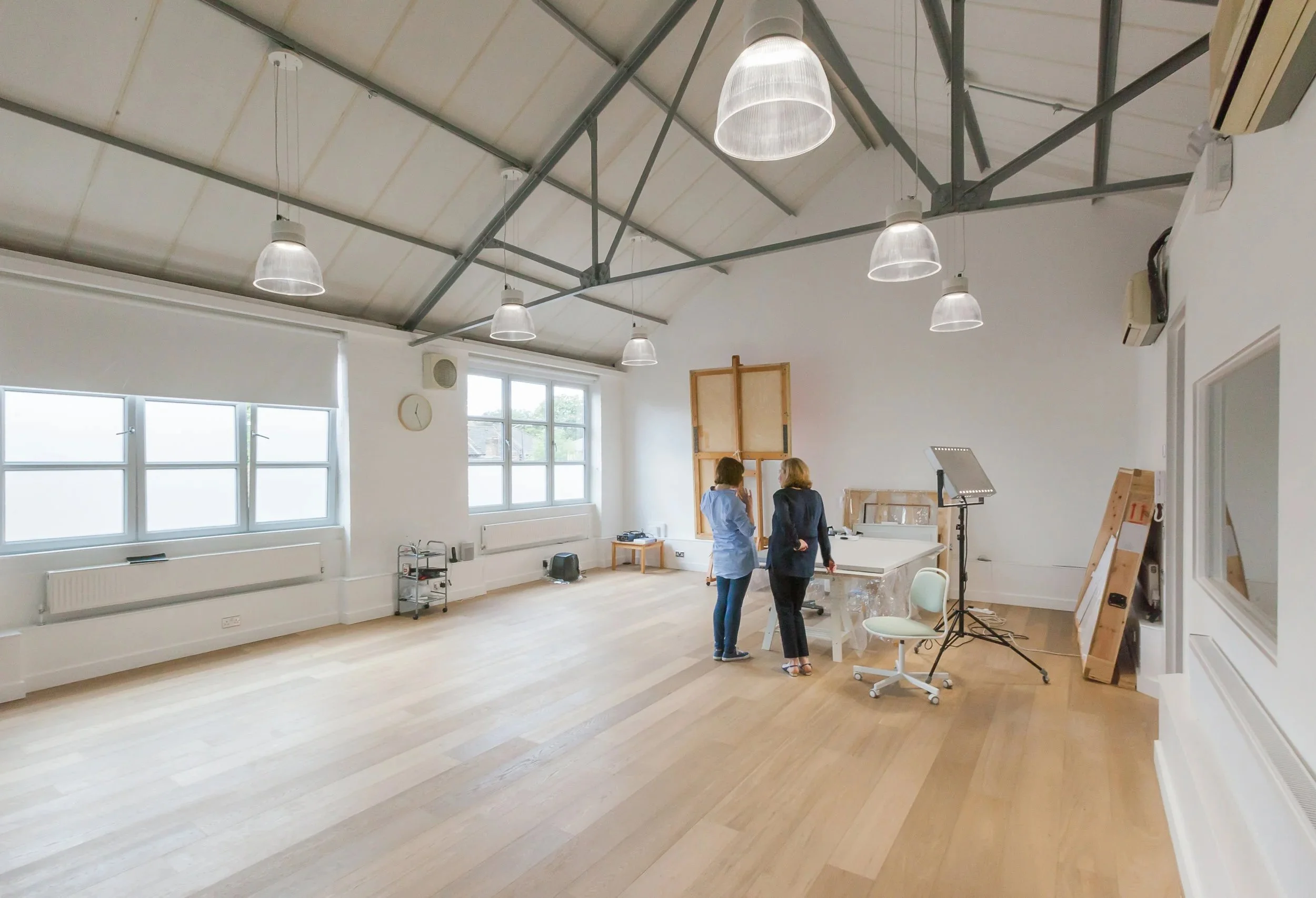
View: Julia Nagle with colleague in the studio.
aP21: …and finally, as you are a world expert in modern painting conservation, we must ask, is there a particular painting in the world that simply takes you to that happy place?
Julia Nagle: I find this impossible to answer; so many images flash through my mind when I think about this question and I can’t choose! Some paintings are like old friends and it’s fantastic to see them on display after we’ve treated them at the studio, other paintings may not appeal immediately but surprise you as you get to know them intimately and you find yourself growing to love them.
At the studio we see paintings come to life as they are cleaned, or torn canvases are repaired.
Mainly, I love the variety of work that’s produced in the World and all the different viewpoints we are exposed to nowadays. I particularly love seeing innovative artworks that have been created by older women. Their courage, hard work and conviction is so inspiring, and I think essential in today’s world when it often seems we’re expected to be embarrassed and even ashamed of aging!