
Confabulations: Marie Zolamian Pt. 2
In Part 2 of our interview with artist, Marie Zolamian, Dr Omar Kholeif’s follows Zolamian into the artist’s metaphors—ones often found in her titles, her use of paint, her recapitulation of history and in the situated space of the imagination.
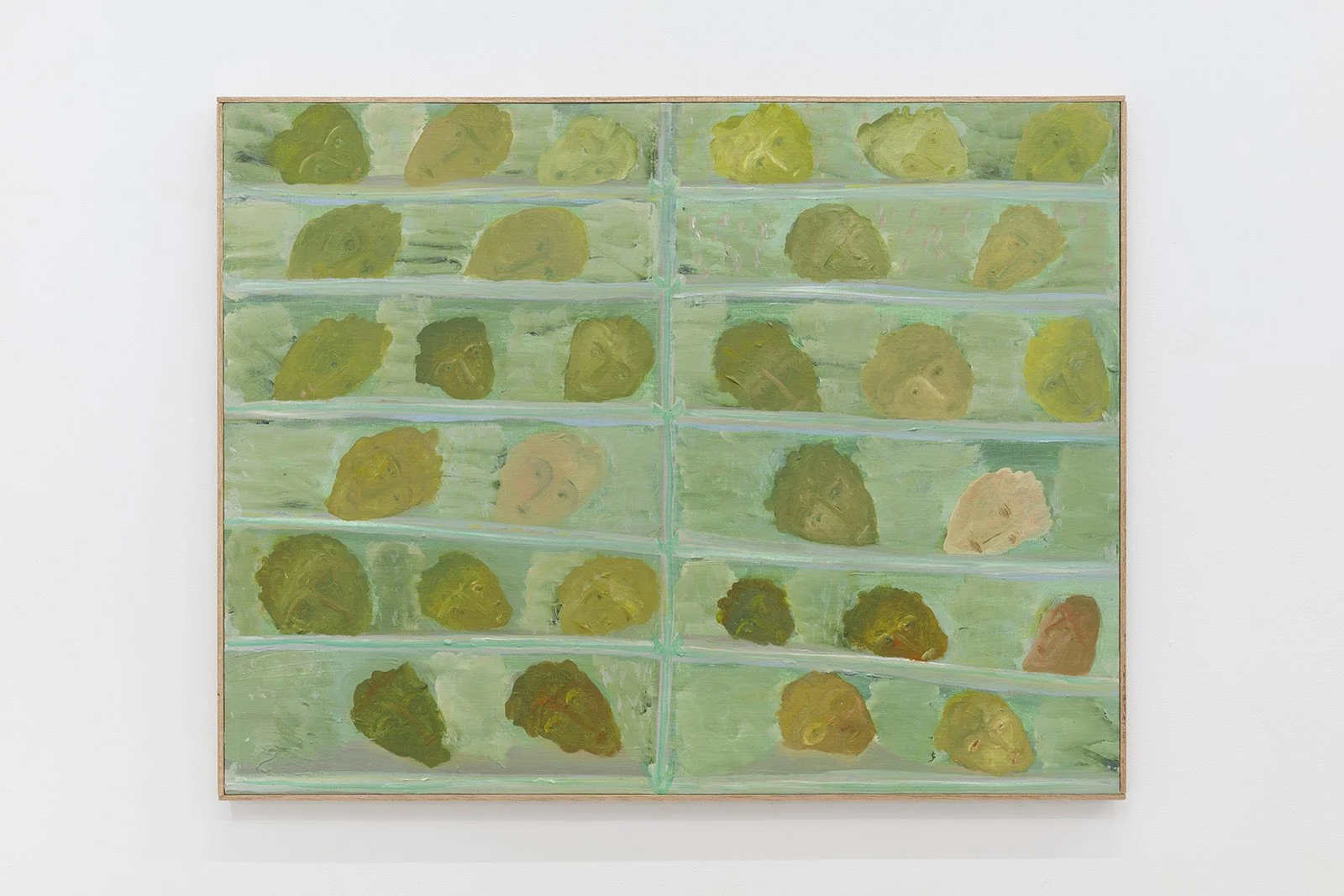
Marie Zolamian, Hybris, 2024. Oil on linen on panel, 55 x 70,5 cm. Photo: Roberto Ruiz.
Omar Kholeif: Your titles are often lyrical and poetic anagrams. Would you mind telling us where the name Thaumaturge came from?
Marie Zolamian: Since 2016, I've been titling my paintings with words and expressions from a vocabulary list I'm trying to learn and get to know for their sound, meaning, etymology and history. A list I keep as I read, hear, watch films, reports and series. Only after I've finished the painting, and when I have to title it, do I go through the list, wondering if one or other signal between the painting and the word can be linked. It has become a mnemonic means for learning them.
A ‘thaumaturge’ is a performer of miracles; a magician. A figure of passage, someone who operates quietly, who activates something without fully revealing what and how.
This corresponds to how I understand an image: not as representation, but as an archaeological site where memory and intuition, imagination and unconsciousness are set in motion. The word “Thaumaturge” interested me for its power of passage and activation. A figure that acts without demonstration, that shifts a state, that sets something in circulation between the visible and the invisible. This resonates with the way I think about painting. For me, painting makes more visible something that is already visible: a psychic and a spiritual intensity. A memory in regeneration. I often have the feeling that it speaks to me, that it leads me toward a zone where the conscious and the unconscious work together
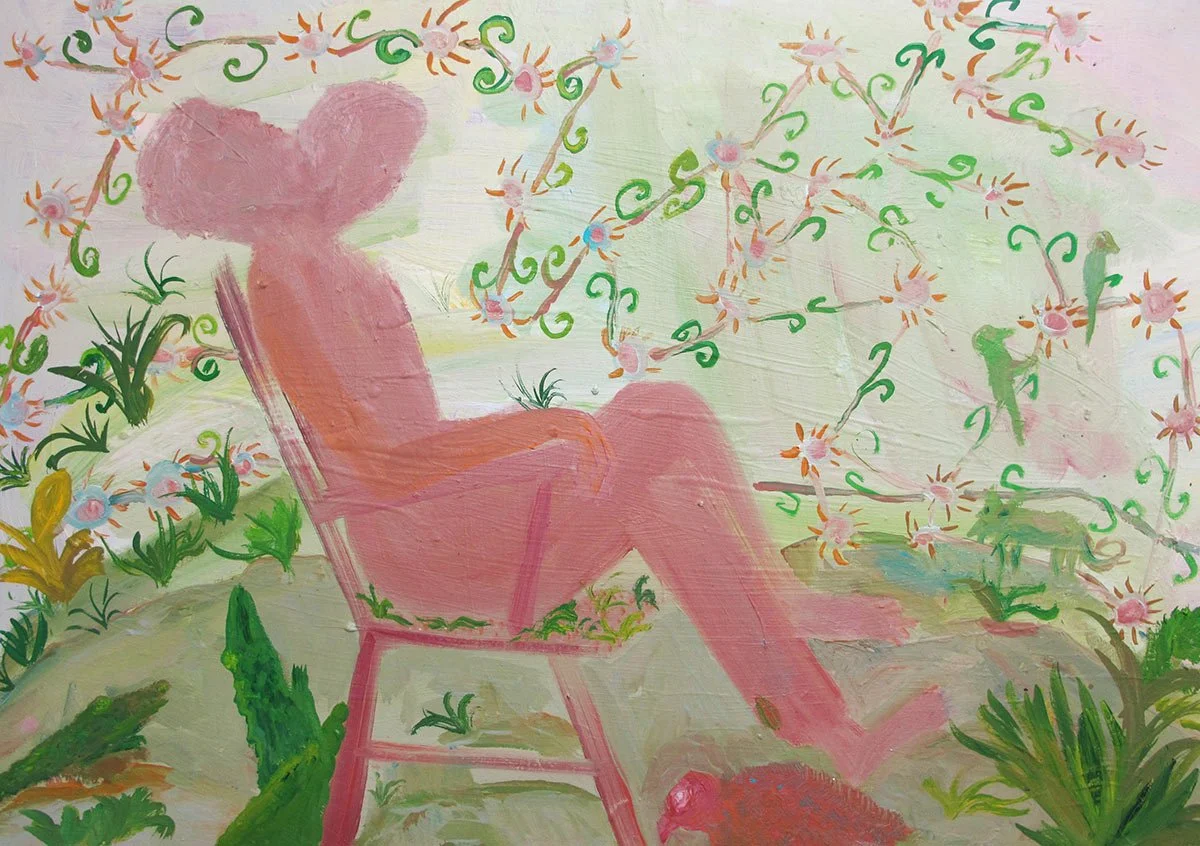
Marie Zolamian, SA MUE, 2024. Oil on canvas, 20 ¾ x 27 ½ inches. Photo: Roberto Ruiz. Courtesy of Bombon Projects, Barcelona and the artist.
OK: As I write to you, you have recently opened a major survey exhibit at Wiels in Brussels and published a monograph with Posture Editions—two separate but intertwined projects. How has the process of reflecting on your practice been? Has it enabled you to discover something of yourself, or your work?
MZ: Posture Editions invited me to undertake a monographic publication in August 2024, and WIELS proposed a solo exhibition in March 2025. During Posture Editions’ first studio visit, the team was immediately interested in taking drawings from 2023 as the core of the publication. A selection of paintings was added later. For me, theoretical perspectives were a given; they were necessary to the making of a book. The interview with curator Sofia Dati, and the commissioning of texts by two curators with whom I had previously worked, Vanessa Desclaux and Antony Hudek. Dirk Snauwaert and Zoë Gray had visited my studio in 2020 for the group exhibition “Regenerate” in 2021. In March 2025, Dirk Snauwaert and Sofia Dati proposed the solo exhibition at Wiels for February 2026. For me, the association between the publication and the exhibition was natural.
I see the exhibition as a composition in constellation form, made up of several parts from series of works selected across diverse temporalities and geographies, while the book focuses essentially on a selection of drawings on paper from 2023 to 2025. Working on both at the same time intensified the sense that the work is in transformation and in construction with the present. It made visible certain recurrences, ricochets, and persistences of gestures, creatures and figures, of rhythms, relations between images, sequences, discontinuities, and echoes.
The title I chose, ‘Confabulations’, reflects on the attempt to construct memory through art, to shape moments through the imaginary, and to consider them as recollections and as part of future memory. If something became clearer, it would be the persistence of a method, a way of proceeding that remains open, whether in a single work or across the practice as a whole. A method founded on gathering, displacement, superimposition, and slow transformation.
A method in which fragments remain active, in which scenes coexist without hierarchy, and in which each an ensemble closes a cycle while remaining connected to the others. I saw in it more a constellation than a linear narrative, a montage rather than a continuous unfolding. There is also something of the order of confirmation: painting as a fundamental language, as a borderless medium, as a ground of reception and sedimentation where history, tradition and imagination are deposited, dissolve, and then reappear otherwise. The book and the exhibition reinforced this: they showed that my work is constructed in and despite discontinuity, in impermanence. In the circulation of energy from one painting to another, from one medium to another, from one temporality to another.
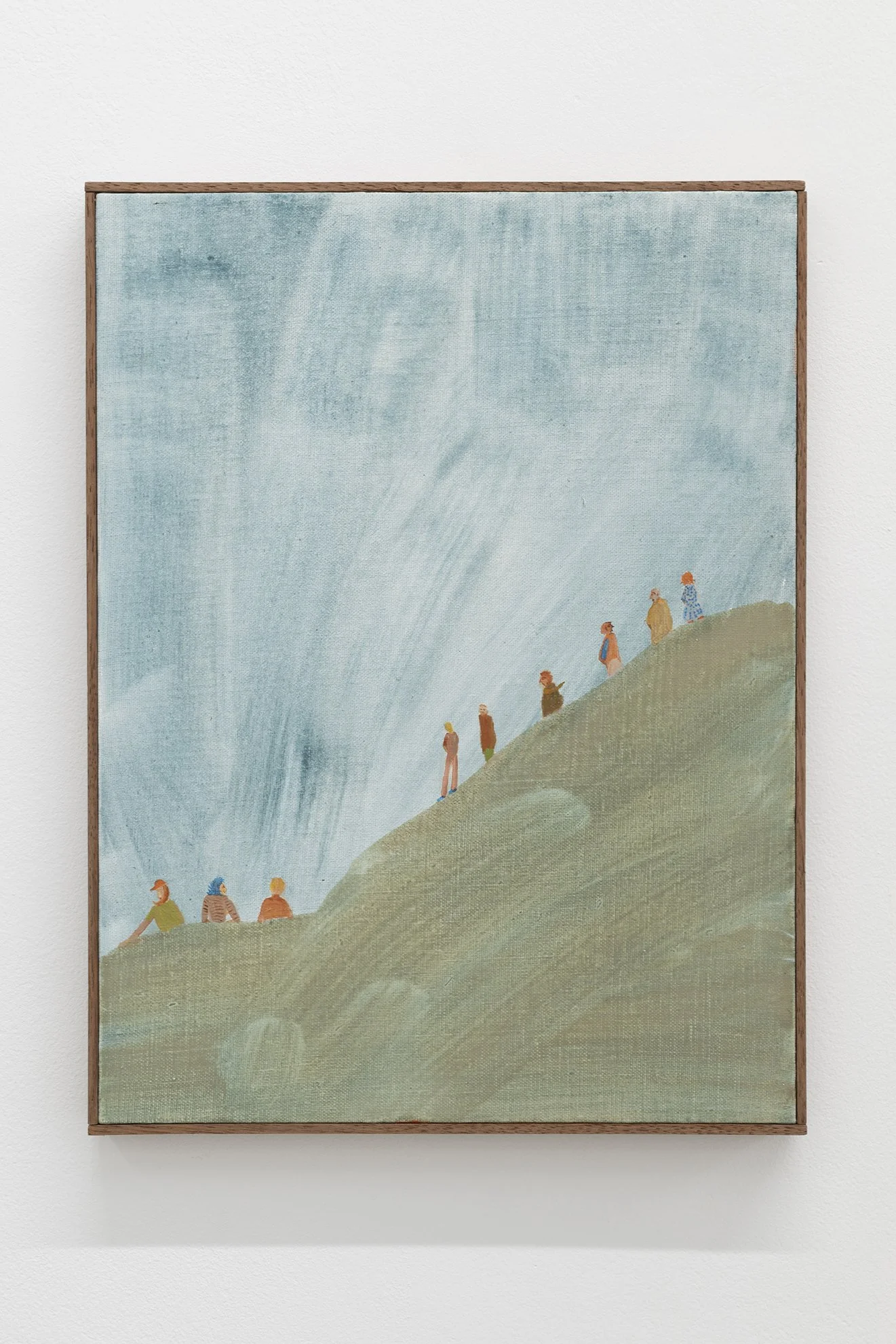
Marie Zolamian, Suc, 2023, 40x30cm. Photo: Roberto Ruiz. Courtesy of Bombon Projects, Barcelona and the artist.
OK: I like to ask this to every artist. Was there a particular inflection point in your life, or in your practice when you felt something changed in you? The creation of a particular work, or encountering a specific artwork that inspired a change, or that served as a rite of passage?
MZ: Rather than a single point, I would speak of a series of inflection points that gradually led me to where I am now. I grew up with fifteen years of the Lebanese civil war. I was thus raised in a cosmopolitan environment, learning and speaking Arabic, Armenian, French and English at the same time, while also becoming familiar with the specific histories of different regions through those same languages. Coming to Belgium was equivalent to being reborn. At a flee market, I came across two books, one thick, yellow-paged book on scribbles of André Masson, and another on the paintings of Tamara de Lempicka. I was amazed and had this question on how and why can these insignificant and minuscule details bring forth so many words, thoughts and concepts.
Studying painting at the age of 25 at the Fine Arts Academy of Liege was equivalent to being reborn once again. My Erasmus in Palermo was my first creative experience of detachment from the familiar, and of the search for new points of reference. It probably marked an inflection point, unfolding through geographical, cultural, psychic, and visual displacement, and through observing how the mind has to recreate new imaginaries and enigmas through this decomposition and recomposition.
This showed me the importance of artistic practice. Immersed in a world of destruction, art allowed me to understand that creation could still open onto rare, fleeting, yet deeply happy moments. The creation of a space of devotion is bound up with the search for a way of being in the world: to welcome, to see, to absorb, to displace, to transform, to try to understand the unknown. From that point onward, painting became a way of making visible what is at work in depth: the imaginary, intuition, the unconscious, premonition, enchantment, survival. To make sense of the resonances of the present.